
A nation’s security depends on its ability to develop, manufacture and sustain the systems it relies on. The defence industry provides the institutional foundation for that capability. Its global importance lies in supporting credible deterrence while building engineering expertise, resilient supply networks and the freedom to make strategic choices. A capable defence ecosystem turns security commitments into capabilities that can actually be delivered and maintained.
According to SIPRI, global military expenditure reached US$2.887 trillion in 2025, increasing by 2.9 per cent in real terms from the previous year. This figure represents total military expenditure, including personnel and operating costs, rather than defence company revenues. Even with that distinction, the scale is unmistakable: security is one of the world economy’s most consequential areas of long-term resource allocation. [1]
The production capacity behind credible deterrence
Credible deterrence requires capabilities that can be delivered when needed and supported consistently. The value of a system depends on the availability of spare parts, effective maintenance and reliable software updates throughout its service life. Factories, skilled people and dependable suppliers therefore form part of a country’s long-term security infrastructure. Dependence on a single critical component can constrain the availability of even a highly advanced platform.
Technological capability and economic depth
Defence programmes demand high standards in advanced materials, precision manufacturing, electronics and software. That demand can create commercial and learning opportunities across a network extending from universities to specialised smaller businesses. Economic value accumulates in design expertise, intellectual property and repeatable production quality. These benefits require deliberate investment in research, talent and pathways into civilian applications; higher spending alone does not guarantee technological progress.
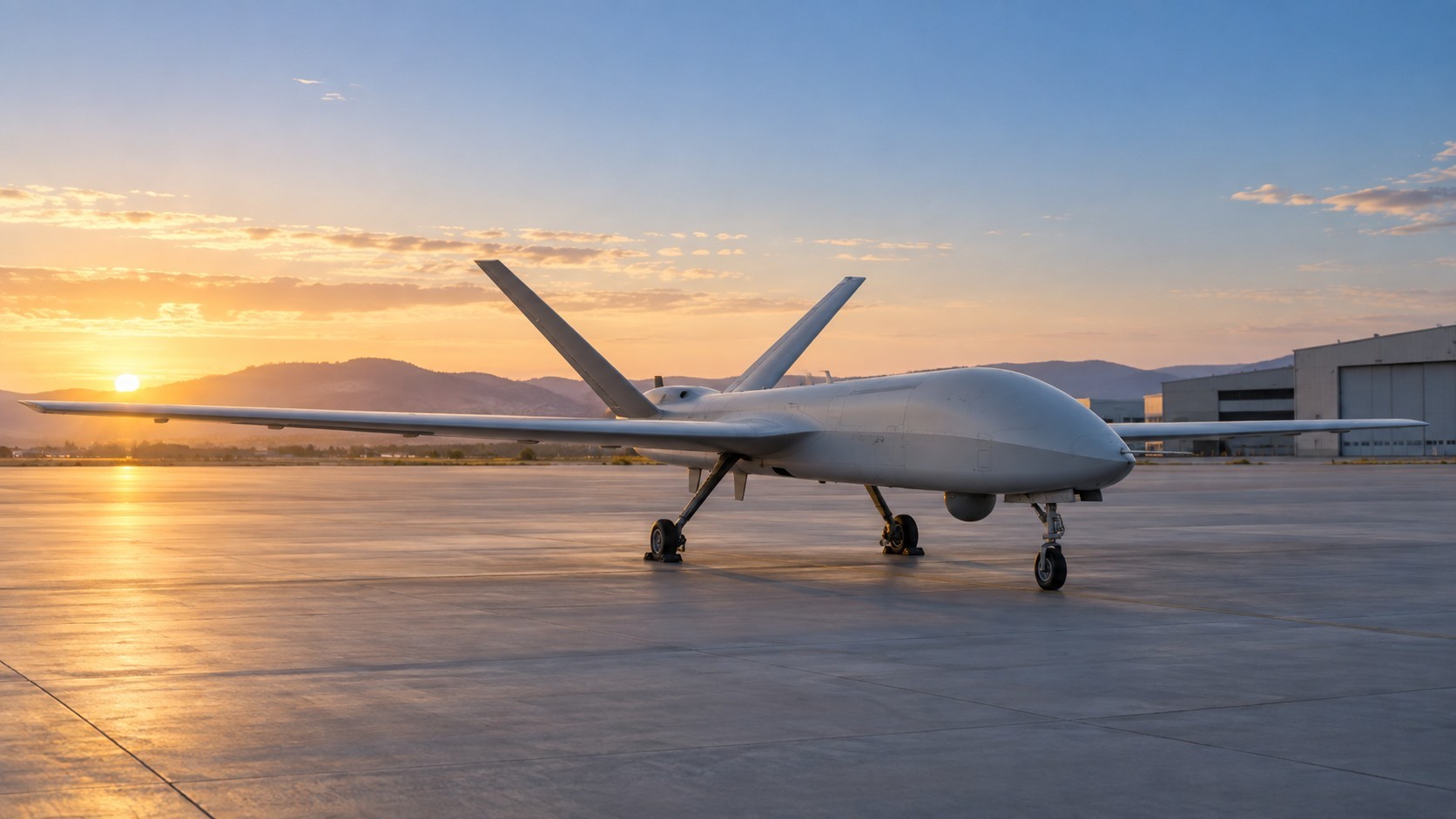
Unmanned aerial vehicles make this industrial interdependence visible. A UAV brings airframe design, sensors, communications and software into a single system whose components must work reliably together. Lasting competitiveness therefore extends beyond manufacturing the platform to validation, maintenance and adaptation as requirements change. With appropriate permissions and modifications, relevant technologies can also support civilian activities such as disaster monitoring and infrastructure inspection.
How industrial strength becomes measurable
| Strategic contribution | Measure to track |
|---|---|
| Operational continuity | Availability and maintenance turnaround |
| Supply resilience | Alternative sources for critical components |
| Technological capability | Validated design and software capacity |
| Economic sustainability | On-time delivery and lifecycle cost |
Patient capital and dependable partnerships
The time between research investment and recurring revenue can be substantial. Building capacity, retaining specialists and expanding supplier networks all require predictable demand. NATO’s updated Defence Production Action Plan of 2025 similarly emphasises greater production capacity, industrial cooperation and more resilient supply chains. The financial implication is clear: dependable order visibility must be matched by disciplined capital allocation. [2]
Strategic autonomy does not require every component to be produced domestically. Developing critical capabilities at home while working with trusted international partners can create a more resilient industrial base. Performance should be judged through delivery reliability, lifecycle costs and customer support as well as export volumes. Larger budgets are not, by themselves, evidence of efficiency; public investment must also be assessed against its opportunity cost and demonstrated results.
The defence industry’s enduring global value lies in building the industrial capacity that supports public security and preserves freedom of action during crises. Its legitimacy is strengthened by accountability, responsible exports and respect for international law. The advantage that will matter most is the ability to translate technological ambition into dependable production and sustainable institutional capability.