

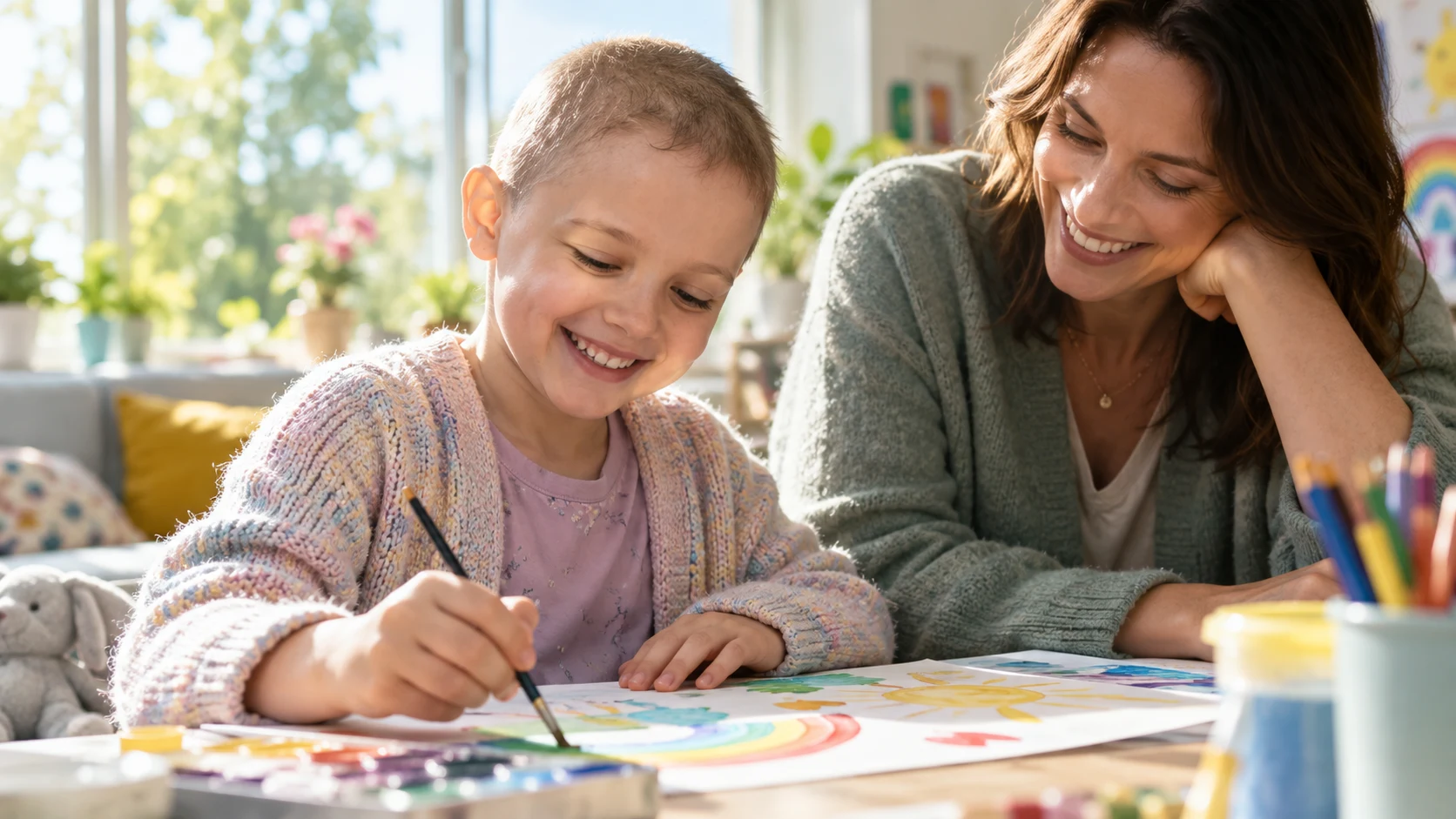
A child’s future includes play, friendships, education and dreams. A leukemia diagnosis affects this whole life. Compassion therefore means listening to the child and understanding the responsibilities carried by the family.
At IBL Finance, support for children with leukemia and their families is an important part of our social responsibility, and we support solidarity in this field. We closely follow developments in diagnosis and treatment through reliable scientific publications. Our aim is to contribute to informed awareness that respects human dignity.
Diagnosis: taking symptoms seriously and reaching specialist care
Leukemia is a group of cancers affecting blood and bone marrow. Acute lymphoblastic leukemia (ALL) and acute myeloid leukemia (AML) are distinct childhood diseases, with different treatments and outcomes.
Unexplained or persistent fever, marked pallor, easy bruising, bleeding, fatigue and bone pain may need medical assessment. These symptoms do not by themselves mean leukemia. Tests may include a blood count, bone marrow examination, cell typing and genetic analysis. Diagnosis belongs with a pediatric hematology and oncology team.
Treatment tailored to the disease and the child’s response
Treatment depends on subtype, genetic features, risk group and response. Combination chemotherapy is a central approach; targeted medicines, immunotherapy or stem cell transplantation may be appropriate in selected circumstances.
Measurable residual disease (MRD) testing can help assess response and relapse risk. Infection management, blood products when needed, nutritional support and psychosocial care are also integral to treatment.
Recovery figures: reading encouraging numbers accurately
US data summarized by the National Cancer Institute report approximately 90% five-year survival for ALL and 69% for AML in children younger than 15. These are not national rates for Türkiye.
Five-year survival means being alive at least five years after diagnosis; it is not a guarantee of cure. Individual outcomes vary with disease features and response. WHO reports cure rates above 80% for childhood cancers in high-income countries, compared with below 30% in many low- and middle-income countries. These figures concern all childhood cancers, not leukemia alone, and highlight unequal access to care.
New approaches: more precise and personalized care
Blinatumomab is an immunotherapy that helps immune cells recognize certain B-ALL cells. In AALL1731, selected children with newly diagnosed standard-risk B-ALL and average or higher relapse risk had estimated three-year disease-free survival of 96.0% with blinatumomab plus chemotherapy, versus 87.9% with chemotherapy alone. Median follow-up was 2.5 years. This is not a universal leukemia result or a definitive cure rate.
CAR T-cell treatment modifies a person’s T cells to recognize cancer cells. In the United States, tisagenlecleucel is approved for patients up to age 25 with refractory B-cell precursor ALL or disease in second or later relapse. Serious immune and neurological adverse effects require specialist assessment and monitoring.
Genetically matched targeted medicines and MRD-guided decisions are also part of precision care. A newer treatment is not automatically the right choice for every child. Availability, licensing and reimbursement in Türkiye require separate assessment; the child’s specialist team determines treatment.
Childhood should continue during treatment
Support should include more than medical care. Education, safe play, friendships, psychological support, transport and suitable accommodation matter to families. Follow-up, monitoring of late effects and help returning to school may be needed after treatment.
A child’s happiness is precious, but no child should feel obliged to appear strong or keep smiling. Disease outcomes are not determined by whether a child or family thinks positively enough. Respectful support means listening, protecting privacy and responding consistently to needs.
Important sources of solidarity in Türkiye
LÖSEV — Lösemili Çocuklar Sağlık ve Eğitim Vakfı works to meet the health and education needs of children with leukemia.
KAÇUV — Kanserli Çocuklara Umut Vakfı supports children and families through Family Houses and psychosocial work.
The official links below explain their activities, volunteering and support channels. These organizations are presented for information; their logos do not indicate a formal partnership with IBL.
 LÖSEV
LÖSEV KAÇUV
KAÇUVIBL’s approach: responsible support rooted in compassion
We value our support in this field and our responsibility to follow scientific progress. We support children’s access to care and education, solidarity with families and recognition of civil society’s work.
We believe compassion is expressed through respect for children’s rights, accurate information and support directed through trustworthy channels. A contribution gains meaning through how sensitively and sustainably it responds to a family’s needs.
Strong Steps, A Sustainable Future… For children’s tomorrows, through science, hope and solidarity.
Sources
- NCI — Childhood ALL: diagnosis and treatment
- NCI — ALL: survival and treatment evidence
- NCI — AML: survival and treatment evidence
- WHO — Childhood cancer
- AALL1731 — Blinatumomab trial, NEJM 2025
- FDA — Tisagenlecleucel: US indication
- FDA — Tisagenlecleucel approval review and safety
- LÖSEV — Purpose
- KAÇUV — Foundation story
1 October 2026. General information, not individual diagnosis or treatment advice. Medical decisions should be made with a pediatric hematology and oncology team. The fictional image does not document a real patient or foundation event.